“growth Zone” search results (400)

Yunnan Coffee strives for "International voice" to open Yunnan on Wednesday, October 5, 2016
After years of hard work and efforts, the 26th World Coffee Science Conference, known as the Olympic event of the coffee industry, will be held in Kunming from November 13 to 19 this year. This is the first time that China has held the World Coffee Science Conference. At that time, there will be hundreds of delegates from more than 60 countries, as well as Nestle, UCC, illy, Hougu and other famous Chinese and foreign coffee products.
2016-10-17 Yunnan coffee effort international voice 2016 October 05 Li
Coffee tree history coffee morphological characteristics coffee cultivation techniques
Coffee tree is a shrub or small tree of Rubiaceae; leaves opposite, leathery, long oval; every March, branches will emerge white flowers, petals spiral arrangement, flower center around the petals jump, a closer look, really like childhood play with the small windmill, issued bursts of jasmine fragrance; fruit is oval, berry, dark red, hidden two seeds, that is, we are familiar with coffee
2016-05-26 coffee history morphological characteristics cultivation techniques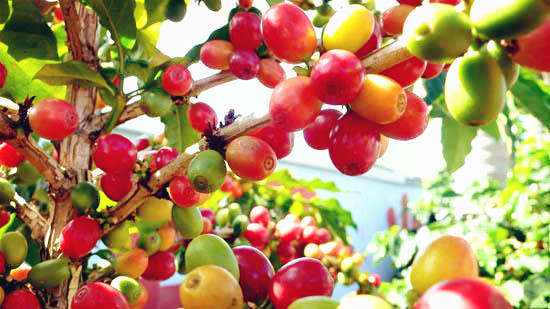
Asia China Fine Coffee Bean Origin Indonesia Bali Coffee Fine
China's coffee-producing areas are mainly in Hainan, Yunnan, Guangdong and Taiwan. Hainan Island north, south of Yunnan Province, located between 15 degrees north latitude to the Tropic of Cancer, its coffee is strong but not bitter, fragrant but not strong, very unique. And with a little fruit flavor, coffee is the top grade, international praise. Taiwan is located in the subtropical zone, mountainous territory, and there is a clear rainy season, coffee is not bad
2016-03-30 Asia China Fine Coffee Bean Origin Introduction Indonesia Bali Coffee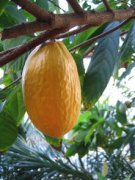
What's the difference between cocoa beans and coffee beans?
Cocoa and coffee are two different plants with different tastes. Chocolate, formerly known as cacao, is a seed taken from the fruit of a cocoa tree, which grows directly from tree trunks and branches, also known as cocoa pods. Mature cocoa fruits, that is, cocoa pods, change in color from turquoise to yellowish brown or reddish brown, with different species of trees
2015-03-04 Coffee common sense cocoa beans coffee beans what the difference but and coffee two no
Introduction of Coffee Variety characteristics and Grinding degree in Saint Roman Manor, Costa Rica
The topography of Costa Rica is that the coast is surrounded by plains, while the middle is cut off by rugged mountains. The country declared 200 nautical miles in its exclusive economic zone and 12 nautical miles in its territorial sea. The climate belongs to the tropics and subtropics, and some of them are new tropics. Population [edited this paragraph] 4.27 million (2007). The official language is Spanish. 95% of the residents believe in Catholicism. In Costa Rica, only
2016-09-27 Costa Rica Roman Manor Coffee producing area Variety characteristics Grinding introduction
Growth Environment and brewing of small Coffee
Small grain coffee scientific name: Coffea arabica family genus: Rubiaceae coffee genus morphological characteristics: small trees or large shrubs, plant height 5 meters 8 meters. Base usually much branched, old branches gray-white. Nodes inflated, young branches glabrous. Leaves thinly leathery-ovate-lanceolate or lanceolate, apex long acuminate, base cuneate or slightly obtuse, entire or shallowly wavy, both surfaces glabrous. Cymes several clustered in leaf axils
2015-04-28 Small grains coffee growth environment brewing small grains scientific name Coffea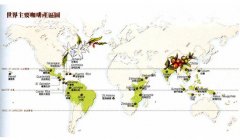
Coffee growing belt
Most of the coffee producing areas in the world are located in the tropics between the Tropic of Cancer and the Tropic of Cancer, which we call the "coffee belt" or Coffee Belt or Coffee Zone in English.
2014-07-11 Coffee knowledge coffee cultivation coffee planting belt coffee encyclopedia
Barista course
Climate is the decisive factor for coffee cultivation. Coffee trees are only suitable for growing in the tropics or subtropics, so the zone between latitude 25 degrees south and north is generally called
2014-07-16 Coffee knowledge barista coffee training
Major coffee producing countries
Coffee trees are very similar to laurel and usually grow between the Tropic of Cancer and the Tropic of Cancer.
2014-07-25 Coffee knowledge coffee producing area coffee producing country
World Map of Coffee beans
There are shadows of coffee beans in many parts of the world, and they can grow normally as long as the climate is right. These places suitable for the cultivation of coffee beans, usually located between the Tropic of Cancer and the Tropic of Cancer, are called coffee growth zones. R: Robusta coffee beans M: mixed coffee beans A: Arabica coffee beans
2014-09-05 Coffee beans coffee bean maps coffee bean producing areas
Kenya Coffee Estate Flavor Taste Characteristics Berman Estate Introduction
Kenya is divided into seven provinces (Province) and one provincial district (Nairobi Province). The province is divided into districts (DISTRICT), townships (DIVISION) and villages (LOCATION). According to the new Constitution, the four-tier administrative structure will be changed to two levels, central and county (COUNTY). The 47 districts established under the new Constitution will be fully operational after the 2013 general elections. 7 provinces: Central Kenya
2016-08-15 kenya coffee estate region flavor taste characteristics berman introduction
Common sense of Chinese Coffee growth Environment and brewing of small Coffee
Small grain coffee scientific name: Coffea arabica family genus: Rubiaceae coffee genus morphological characteristics: small trees or large shrubs, plant height 5 meters 8 meters. Base usually much branched, old branches gray-white. Nodes inflated, young branches glabrous. Leaves thinly leathery-ovate-lanceolate or lanceolate, apex long acuminate, base cuneate or slightly obtuse, entire or shallowly wavy, both surfaces glabrous. Cymes several clustered in leaf axils
2014-12-01 China coffee common sense small grain growth environment brewing scientific name
Common sense of Coffee beans in Yunnan growth Environment and brewing of small Coffee
Small grain coffee scientific name: Coffea arabica family genus: Rubiaceae coffee genus morphological characteristics: small trees or large shrubs, plant height 5 meters 8 meters. Base usually much branched, old branches gray-white. Nodes inflated, young branches glabrous. Leaves thinly leathery-ovate-lanceolate or lanceolate, apex long acuminate, base cuneate or slightly obtuse, entire or shallowly wavy, both surfaces glabrous. Cymes several clustered in leaf axils
2015-03-10 Yunnan coffee beans common sense small grains coffee growth environment brewing
Comprehensive data of Chinese Coffee Yunnan Simao small seed Coffee
Coffee is an advantageous and characteristic industry in the hot area of our city, and it is also one of the main agricultural products that our city exports to earn foreign exchange. In order to standardize the production technology, product standards and marketing behavior of coffee industry in our city, and improve the standardization level of coffee industry, the comprehensive standard of Pu'er small seed coffee was compiled according to the requirements of GB/T1.1 and GB/T1.2. This section defines the terms and definitions in the initial processing of small seed coffee.
2014-12-26 China Coffee Yunnan Simao small Grain Comprehensive data our City Hot area
What kind of planting environment do coffee trees need to have? do coffee trees require a high planting environment?
The first flowering period of the coffee tree is about three years old. the white five-petal tube-shaped flowers are filled with a faint scent of jasmine and the inflorescences are arranged in dense clusters. Flowers wither after two or three days of blooming and begin to bear fruit after a few months. The fruit is a drupe with a diameter of about 1.5 cm, which is green at first, then turns yellow gradually, and turns red after ripening, which is very similar to cherries.
2016-07-11 Growing coffee need have what kind environment requirement high?
Introduction to Costa Rican coffee with bright style and full aroma
The topography of Costa Rica is that the coast is surrounded by plains, while the middle is cut off by rugged mountains. The country declared 200 nautical miles in its exclusive economic zone and 12 nautical miles in its territorial sea. The climate is tropical and subtropical, and there is also part of the new tropical Costa Rica, which accounts for only 0.03% of the world's land area, but has nearly 4% of the world's species, making it the country with the richest biological species in the world.
2016-08-30 Style bright aroma full Costa Rica coffee flavor taste manor
Species and cultivation techniques of Coffee trees
Arabica bean coffee tree can be divided into two main varieties: Arabica species (Coffea Arabica) and Robusta species (Coffea Robusta/Coffea Canephora). There are also some minor species, such as the Liberian species (Coffea Liberica) and the Alabasta species (Coffea Arabusta), but they are rare on the market.
2016-06-03 Coffee category and cultivation techniques varieties classification editing rabbi Kadou coffee main
Colombian Coffee region introduces Hope Manor in the Andes
The pure taste of Colombian coffee comes from Colombia's natural environment with the most favorable conditions for coffee growth. But beyond that, it is inseparable from the hard work of local growers. In Colombia, coffee cultivation has reached 1.07 million hectares, there are about 302000 coffee plantations in the country, and 30 to 40 per cent of the rural population depends directly on coffee production. Columby
2016-07-04 Colombia Coffee producing areas introduction Andes Mountains Hope Manor Columbus
Fine Coffee Encyclopedia barista course
The formation environment of coffee trees in botany, coffee trees belong to the evergreen trees of the subgenus Rubiaceae, and coffee beans, commonly known as coffee beans, are actually the seeds of the fruit of coffee trees, just because they are shaped like beans, so they are called coffee beans. Climate is the decisive factor for coffee cultivation. Coffee trees are only suitable for growing in the tropics or subtropics, so the zone between latitude 25 degrees south and north is generally called
2014-10-23 Coffee knowledge fine coffee encyclopedia barista tutorials
Introduction to the characteristics of Coffee Bean Flavor Manor in Rwanda
Malaba Coffee grows in southern Rwanda, about 12 kilometers (7 miles) from the city of Butare and 150 kilometers (93 miles) from the capital, Gejali. The plan began in the Malaba area of Butare province, but was taken over by a local government organization in 2006, which is now part of the Huye district of the southern province. Due to its proximity to the East African Rift Valley and the Neuenway Forest Mountains, the terrain
2016-08-10 Rwanda coffee beans flavor taste manor producing area characteristics introduction Mayer horse